From Centopietre to the Europe of Pilgrims: new research into the history of Vereto and Capo di Leuca
Research by Valentino Nizzo identifies the relic preserved in Altamura as the one documented in the 16th century in the territory of Patù, and sheds new light on the origins of Siminiano and the legend of the Centopietre. Documents, monuments and clues that had hitherto remained separate form a previously unseen reconstructive picture linking Vereto and Capo di Leuca to France and Spain, from the Via Francigena to the Camino de Santiago, to Charlemagne and Orlando, and to the great cultural networks of Renaissance Europe.
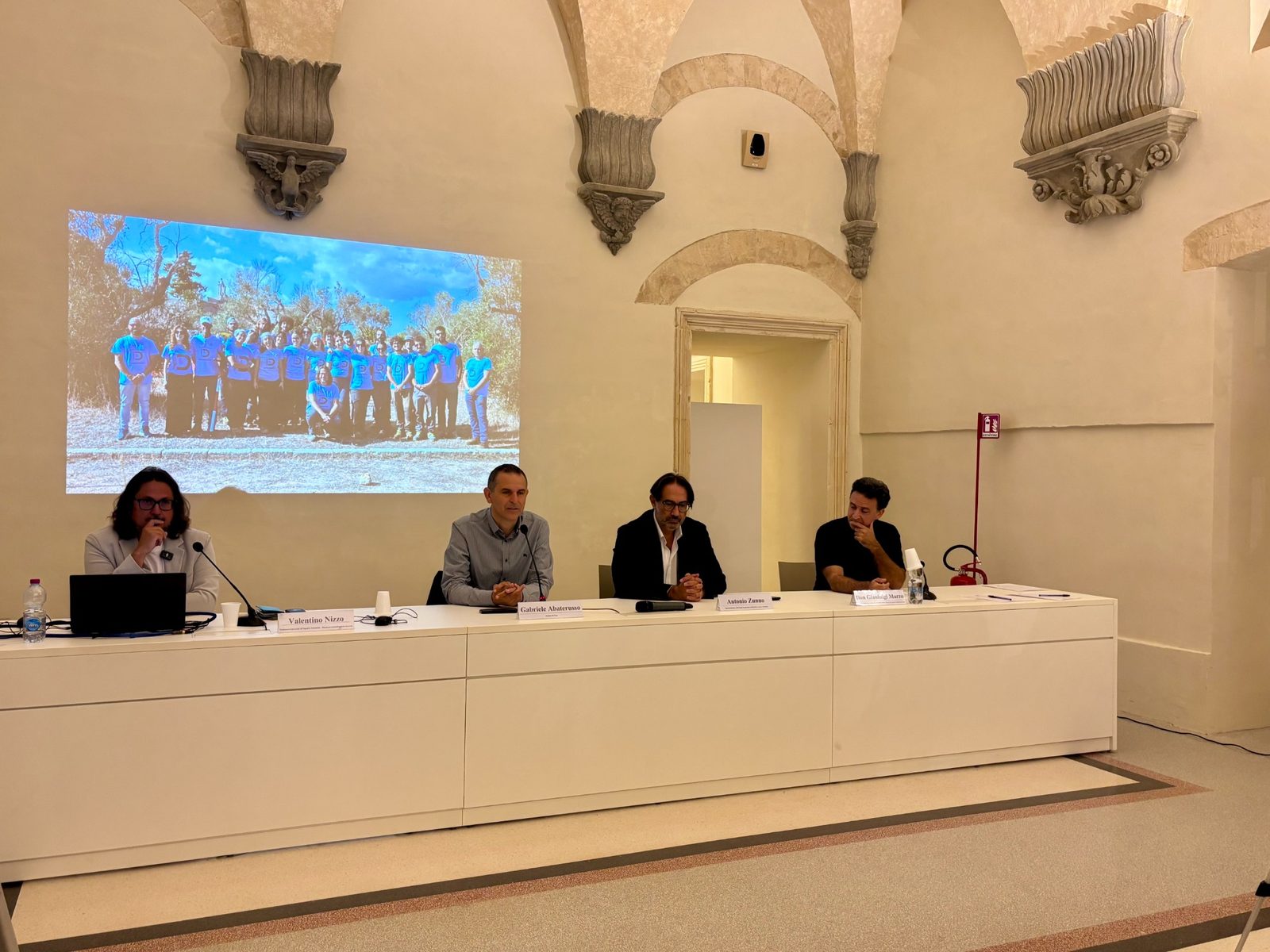
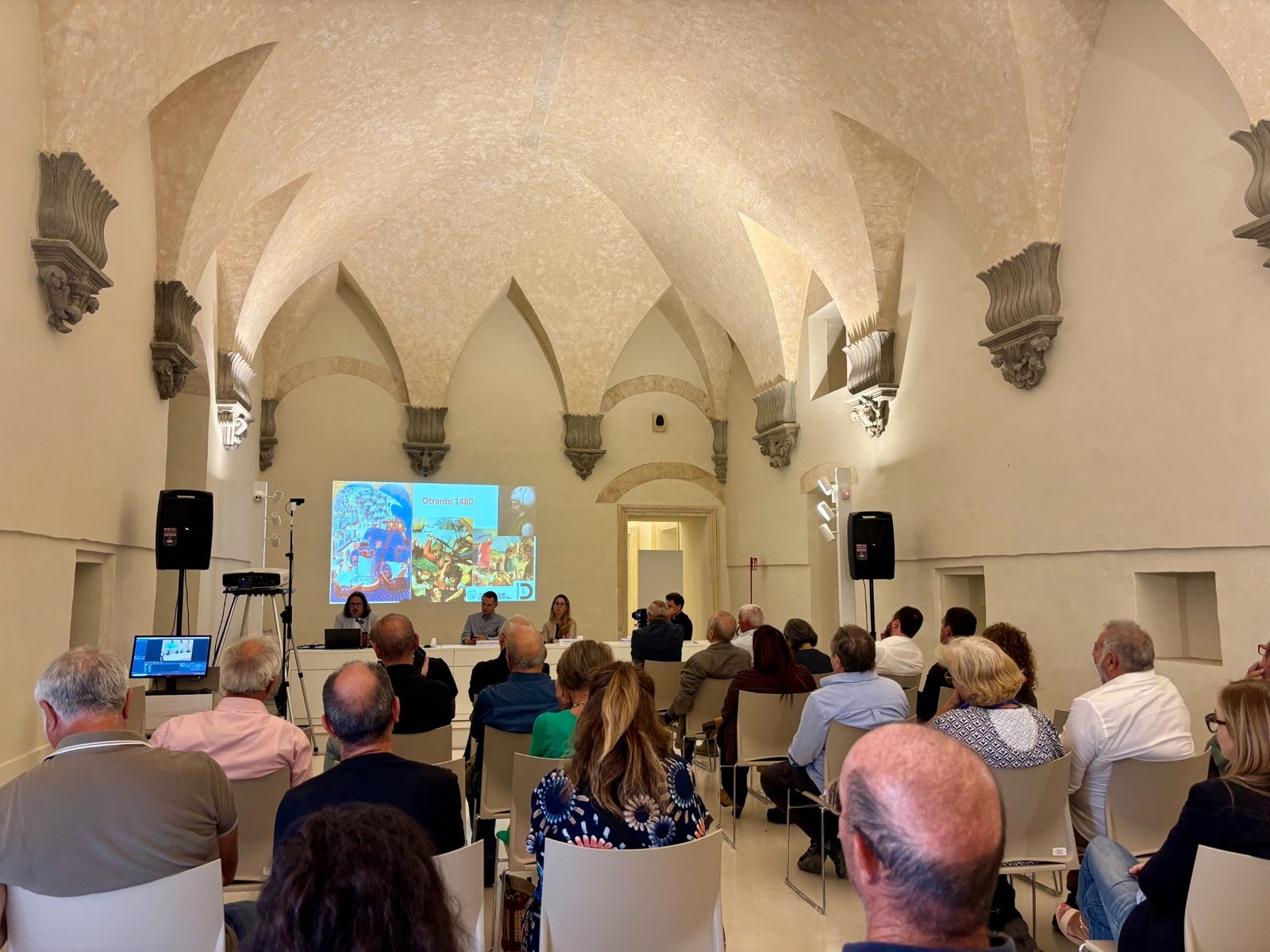
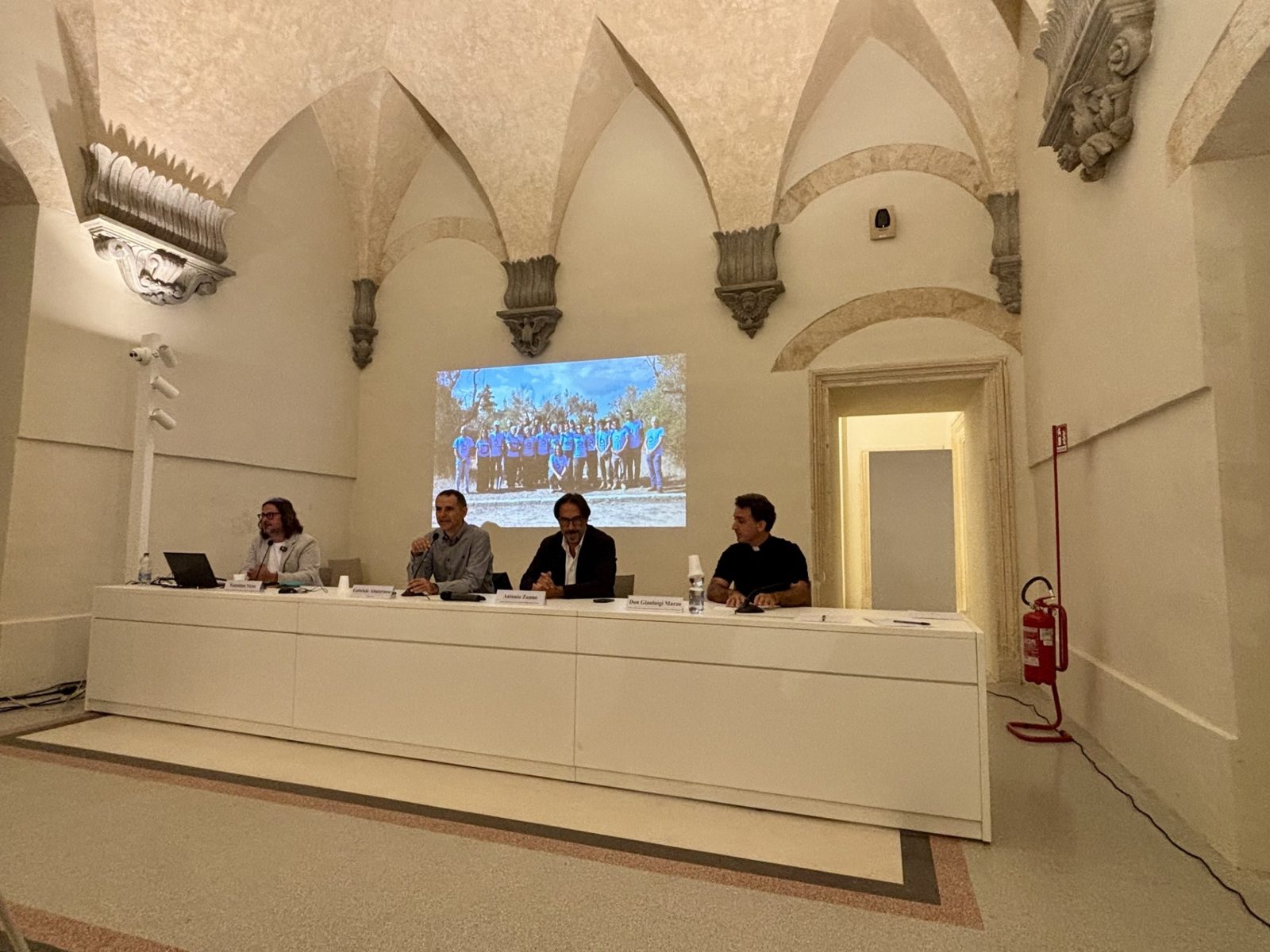
The findings of the research were presented today at the headquarters of the Superintendence for Archaeology, Fine Arts and Landscape for the provinces of Brindisi, Lecce and Taranto, marking the conclusion of the second archaeological excavation campaign at the Vereto site in Patù (Lecce), as part of the municipality’s project ‘The Ionian coast between Greeks and indigenous peoples: Torre San Gregorio, Approdo di Vereto’
A relic venerated for centuries in Altamura can now be traced, with virtually certain documentary evidence, to the territory of Patù and Leuca. And the mysterious figure of Siminiano – the knight who, according to tradition, is said to have died fighting alongside Charlemagne and to have been buried in the Centopietre – is, for the first time, given a historical explanation rooted in the European circulation of legends, pilgrimages and chivalric culture between the Middle Ages and the Renaissance.
These are some of the findings of the research presented today at the Lecce office of the Superintendence for Archaeology, Fine Arts and Landscape for the provinces of Brindisi, Lecce and Taranto by Valentino Nizzo, Professor of Etruscology and Pre-Roman Italian Archaeology at the University of Naples ‘L’Orientale’ and director of the DiscoVereto project.
The starting point is one of the most famous and controversial monuments in the historical and architectural heritage of southern Italy: the Centopietre di Patù, designated a national monument in 1875. Today, the site is at the centre of a dispute between the local council and the monument’s owners concerning the recognition of a right of public use over the area. Meanwhile, the serious state of disrepair and neglect in which the monument finds itself – with the frescoes now almost entirely gone and several roof slabs fractured and in danger of collapsing – has prompted the local council to initiate proceedings to request its expropriation from the Ministry of Culture. The aim is to carry out a project involving safety measures, conservative restoration and enhancement, thereby improving the site’s accessibility and public enjoyment.
Long considered a megalithic, pre-Hellenic or Messapian structure, it is now recognised as medieval, although questions remain regarding its precise chronology and original function. Its scholarly history is therefore, in itself, a lesson in methodology: a monument can take on a radically different meaning when observed without being confined to a preconceived interpretation.
This is the same principle that guided DiscoVereto, the excavation campaign conducted by the University of Naples ‘L’Orientale’ under the scientific direction of Valentino Nizzo, under a concession from the Ministry of Culture and with the supervision of the Superintendence of Archaeology, Fine Arts and Landscape for the provinces of Brindisi, Lecce and Taranto. The research was made possible by the initiative of the Municipality of Patù, which promoted the project in the local area and allocated resources to the archaeological activities, initially from the PNRR ‘Storie Meridiane’ programme and subsequently from the regional SMART-In programme.
Vereto was one of the main Messapian centres in Salento, strategically situated on the Leucadian promontory and linked to the landing places of Leuca and San Gregorio, along one of the connecting routes between the Italian peninsula and the eastern Mediterranean. Following the pre-Roman periods, the city continued to evolve through Romanisation and remained inhabited until late antiquity, when it was suddenly abandoned – according to legend, along with Leuca – following Charlemagne’s battle against the Moors on the Campo Re plain.
It is precisely for this reason that the DiscoVereto project was conceived from the outset as a diachronic study, capable of tracing the entire history of the settlement stratigraphically, right up to its most recent phases. From 18 May to 2 October 2026, with a break during the summer months, two excavation campaigns totalling ten weeks took place on the hill of Vereto and, in the second phase, at San Gregorio, the landing place of the ancient city.
The excavations are revealing precisely the chronological depth sought by the project. In the areas investigated, structures and layers relating to the final phases of the settlement’s occupation and use have come to light, spanning the Roman period and late antiquity; beneath these, the stratigraphy and materials point to the Messapian, Archaic and Early Iron Age phases, with traces of occupation that may be even older. The first campaign had already documented structures dating from the 3rd to the 6th centuries AD, alongside Messapian materials and evidence of the earliest phases of settlement in the area of the so-called acropolis.
From the outset, the excavation site was conceived not as a space restricted to specialists but as an experience of public and participatory archaeology, open daily to the community and accompanied by guided tours, talks, activities for schools and cultural initiatives, which were extended in September to include the landing stage at San Gregorio. Over the course of ten weeks, thousands of people and hundreds of pupils from schools of all levels were able to visit the excavations, in addition to those who followed the research on a daily basis via the website leucantica.it, the social media channels @DiscoVereto and the YouTube channel @Etruschannel. The aim is to share not only the results but also the research process itself: to show how an archaeological finding comes about, how an interpretation evolves, and why knowledge of our heritage is the first step towards its preservation.
The presentation on 5 October is merely the first public presentation of the research. The findings will be published in the coming weeks in the catalogue of the Vereto Archaeological Museum, edited by Mariangela Sammarco, and in Nizzo’s dedicated contribution on the history of Vereto from its origins through to Romanisation and the construction of its collective memory.
The research will then be further developed in a dedicated monograph, which will explore in greater depth the documentary history of the Centopietre, the story of the relic, the origins of the Siminiano tradition and the European parallels that have emerged from the investigation.
Statements
“It is with particular attention and deep interest that we take note of the findings of this historical, documentary and archaeological research. This two-pronged investigation reveals the cultural and human value of historical research for our communities: digging in the ground or sifting through archive records does not merely mean unearthing artefacts or deciphering documents, but rediscovering living testimonies of Christian faith and devotion that time has concealed through the fading of memory. It is our hope that this meticulous reconstruction of our historical and spiritual roots will not remain confined to the realm of specialist scholarship, but will be fully shared with local communities. Understanding and reclaiming this collective memory will enable us to breathe new life and offer a fresh perspective on our monuments from the early Christian period, providing citizens and visitors with a more informed understanding of our spiritual and cultural heritage” (excerpt; full statement available at the following link).
“Research demonstrates once again just how closely knowledge and conservation are linked. The Centopietre is a site of exceptional importance to the region’s cultural heritage, and the opportunity to reinterpret its history within such a broad context further reinforces the need to ensure its study, conservation, accessibility and promotion. In agreement with the Municipality of Patù, we are working to initiate the procedures for the expropriation of the monument. This will enable not only its protection but also the promotion of a site that embodies the identity of Capo di Leuca and the Salento region.”
“At last, Centopietre is emerging from ‘the state of neglect to which it seemed condemned forever’, as Adriano Prandi wrote in 1961. The new findings regarding the monument – the result of Professor Valentino Nizzo’s research within the broader framework of the Leucantica project and the Discovereto excavation campaign – are encouraging the Patù Municipal Council to continue what has, for the past 10 years, been a genuine battle aimed at rescuing the monument and the surrounding area from neglect, the Campo Re necropolis, and to ensure its proper protection through major restoration and enhancement works. Our recent decision to ask the Ministry of Culture, via the Superintendency, to initiate the expropriation procedure proved to be the only viable course of action, given the inaction of the owners – who have never carried out any work on the site – and the impossibility of reaching any kind of agreement to pursue what should be the shared objective of its preservation. This exemplary collaboration between the Superintendency, the Università Orientale, the Diocese of Ugento and the Municipality of Patù, with the crucial support of local associations and the community, will lead to the development of a positive dynamic of cultural and tourist growth for the entire Capo di Leuca area.”
“DiscoVereto, thanks to the commitment of the municipality of Patù and the trust placed in it by the Superintendency, was founded with the ambition of understanding a city across its entire history. Being specialists in the pre-Roman world does not mean seeking only what belongs to that era: it means applying the archaeological method without prejudice, documenting everything the ground reveals, from the most recent to the most ancient phases. It was precisely this approach – at the heart of the wider Leucantica research project – that took us from the Messapian and Roman Vereto to Centopietre, to the construction of medieval and Renaissance memory, and to the encounter between the Christian and Muslim worlds. By bringing together documents and clues that had always remained separate, a picture has emerged that we had not anticipated, one which places Patù and Capo di Leuca within a fully European cultural context. This has been made possible thanks to all those who, from the very beginning, have generously collaborated on the project and supported it and, above all, to the young students from the University of Naples ‘L’Orientale’ and other universities who have actively participated in the research over these intense months.”
For further information, visit the ‘Discoveries’ page